

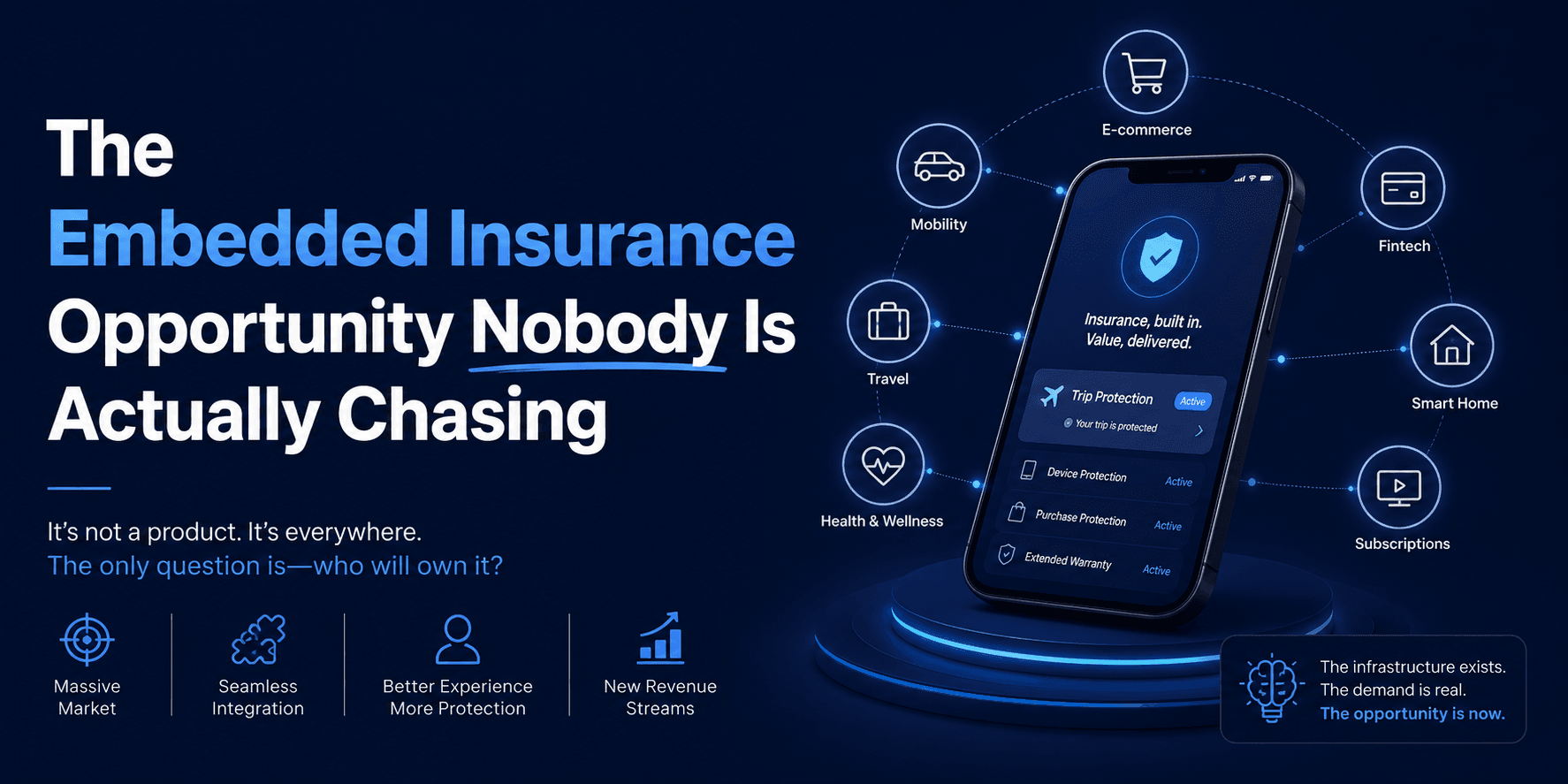
Everyone is talking about super-app partnerships. The real gap is somewhere less glamorous.
When people talk about embedded insurance in Asia, they talk about Grab, GoTo, GCash, Super-apps. Tens of millions of users. Insurance embedded into the ride or the wallet. These partnerships exist and they are genuinely significant. They are also largely done. The distribution positions within the major Southeast Asian super-apps have been established.The carrier and MGA relationships that power them are in place.
The more interesting question - and the one fewer people are asking - is what comes after the super-app. Where is the embedded insurance opportunity that has not already been claimed?
The glamorous embedded distribution deals are mostly signed. The high-value ones that remain are in places that don't make for exciting conference presentations.
The SME platform gap
Small and medium businesses across India, the Gulf, and Southeast Asia are the most systematically underinsured segment in the market. They carry real risk — commercial property, liability, business interruption, trade credit — and they almost never haveadequate coverage. The traditional broker model doesn't reach them cost-effectively. The premium sizes don't support the economics.
But these same businesses are increasingly using digital platforms for their day-to-day operations. Accounting software. Payroll systems. Business banking apps. GST compliance tools. These platforms already hold the financial data required to underwrite basic commercial coverage accurately — revenue, expenses, employee count, business category. They have the customer relationship. They have the trust.
A cloud accounting platform serving 200,000 Indian SMEs has everything an underwriter would want to price a business interruption policy. It knows the revenue. It knows the expense structure. It knows how the business has performed across market cycles. A carrier that builds the right API integration and the right product for that platform can reach 200,000 underinsured SMEs with near-zero acquisition cost. Without the platform, reaching those same 200,000 SMEs through conventional channels would cost multiples of the premium collected.
The SME distribution problem isn't a product problem. It's a channel problem. The channel already exists. It's the tools these businesses use every day. The missing piece is the carrier willing to build for it.
The bancassurance upgrade
India's bancassurance channel is large and growing. Banks refer customers to insurers. Insurers take over the relationship. Premiums flow. It works.
But most bancassurance in India today is a referral model, not an embedded model. The bank introduces the customer and steps back. The real opportunity — insurance built into the bank's own digital experience, priced using the bank's transaction data, serviced within the bank's app — is largely untapped. Banks with large customer bases and rich transaction data have everything required to offer genuinely relevant, contextually priced insurance. Most of them are not doing it because their carrier partners have not built the API infrastructure to make it work.
The carrier that solves this for one major bank does not just win that bank's distribution. It builds a reference implementation that becomes the template for the next partnership, and the one after that. The first mover advantage in genuinely embedded bancassurance in India is real and it has not been claimed.
The embedded insurance race is not over. It has barely started in the markets that matter most. The positions still available are not the ones on the main stage — they are in accounting software and payroll platforms and bank apps. Which, given the scale of the SME market across this region, may turn out to be the most valuable positions of all.